For years the collector car market was described as cooling, correcting or simply catching its breath. Then came August. Over three days of Monterey Car Week, five auction houses sold $747.9m of cars, according to Hagerty figures reported by Motorious. That was 73% more than the same days in 2025, well clear of the previous Monterey record of about $471m set in 2022, and roughly $250m ahead of Hagerty's own pre-sale forecast of $500m.
The bigger story is not the total but what made it. Monterey used to be a showcase for 1950s and 1960s classics. This year the money went overwhelmingly to modern Ferraris and hypercars, and the autumn sales in Europe suggest that was not a one-off.
A week of eight-figure cars
The headline numbers are striking even by Monterey's standards. Of 1,124 lots offered, 844 sold, a sell-through rate of 75%. The average price rose 64% to $866,107. Eleven cars made more than $10m, which Motorious notes is more than the previous five Monterey weeks managed between them. The number of cars consigned with values above $5m rose 71% to 29.
The top of the results table read like a poster wall from a teenager's bedroom in the 1990s:
- 1964 Shelby Cobra Daytona Coupe, $42.9m at Gooding Christie's, a record for an American car at auction.
- 2026 Ferrari Luce "Tailor Made", $40m at RM Sotheby's, sold for charity.
- 1996 McLaren F1 GTR, $34.7m at RM Sotheby's, the most valuable F1 and British car ever auctioned.
- 2023 Ferrari Daytona SP3, $17.8m at RM Sotheby's.
- 1996 Ferrari F50, $14.6m at Mecum, with a 1995 example making $12.1m at RM Sotheby's.
- 2003 Ferrari Enzo, $12.1m at Mecum, and a 1985 Ferrari 288 GTO at $11.6m.
Ferrari accounted for seven of the ten most expensive cars of the week. RM Sotheby's alone took $380m, its best Monterey sale, with 90% of lots sold, bidders from 39 countries and 38 world records broken. Its president, Gord Duff, called it "one for the record books in every way."
The Luce: a special case worth reading carefully
The $40m Ferrari Luce made the most noise, and it needs a footnote. It is Ferrari's new electric model, and this particular car was a charity lot, with all proceeds going to The Ferrari Foundation and no buyer's premium charged. It is now the most valuable new car, and the most valuable electric car, ever sold at auction.
According to Motorious, it went for around 60 times its list price, against a historical average of about 13 times for charity sales of new models. That is generosity, not a valuation, and it says more about the appetite of Ferrari's best clients to be seen supporting the brand than about where electric Ferraris will trade. Strip it out and the week was still a record by a distance.
Modern supercars take over the collector car market
The clearest signal from Monterey is generational. Modern supercars accounted for more than half of all sales by value, Hagerty's figures show. CLASSIC.COM, which counted a slightly higher $751m total, breaks the results down by decade. Its data shows that 53 cars built in the 2020s brought in $147.7m, exactly the same as 182 cars from the 1960s. Cars from the 1970s managed just $22.8m between them.
Hagerty's indices tell the same story over a longer period. As Art & Object reported, the Hagerty Supercar Index rose 30% over the past twelve months, while its Blue Chip Index of traditional collectables fell 2%. Pre-war cars, once the backbone of the Pebble Beach weekend, now make up only about 15% of total sales value.
The buyers have changed too. Millennial and Gen Z collectors are now the dominant group at the top end, and they want the cars they grew up idolising: the F40, F50, Enzo, McLaren F1 and their modern successors. Some are building whole collections in months rather than decades, and Art & Object notes that many are said to treat these cars as speculative assets rather than things to drive.
CLASSIC.COM's data shows why that approach is tempting. It tracked 192 cars at Monterey that had been sold before; together they brought $66m, against $47.4m when they last changed hands.
The money is concentrated, not spread evenly across the market.
Not every car is rising
It would be wrong to read Monterey as a market where everything goes up. The gains were concentrated in rare cars with impeccable history. Motorious observes that mid-tier post-war sports cars underperformed, and CLASSIC.COM found cars from the 2010s sold at a rate of just 63%, well below the week's average. Pre-war cars, by contrast, sold well in percentage terms, at 84%, the highest of any decade, even if they now account for a small share of the money.
In other words, demand is strongest at both ends of the spectrum: the finest early cars and the most desirable modern ones. The broad middle, which once carried the market, is finding fewer bidders.
Europe keeps the pace this autumn
The question after any record week is whether it was a peak. Early evidence from the autumn calendar points the other way. At the Zoute Grand Prix in Belgium on 9 October, Broad Arrow sold €34.6m of cars with 91% of lots finding buyers, the highest total for a collector car auction in Belgian history. Registered bidders were up 44% on 2025, from 33 countries, and more than a third were bidding with the house for the first time.
The pattern matched Monterey closely. The top five lots were all modern supercars:
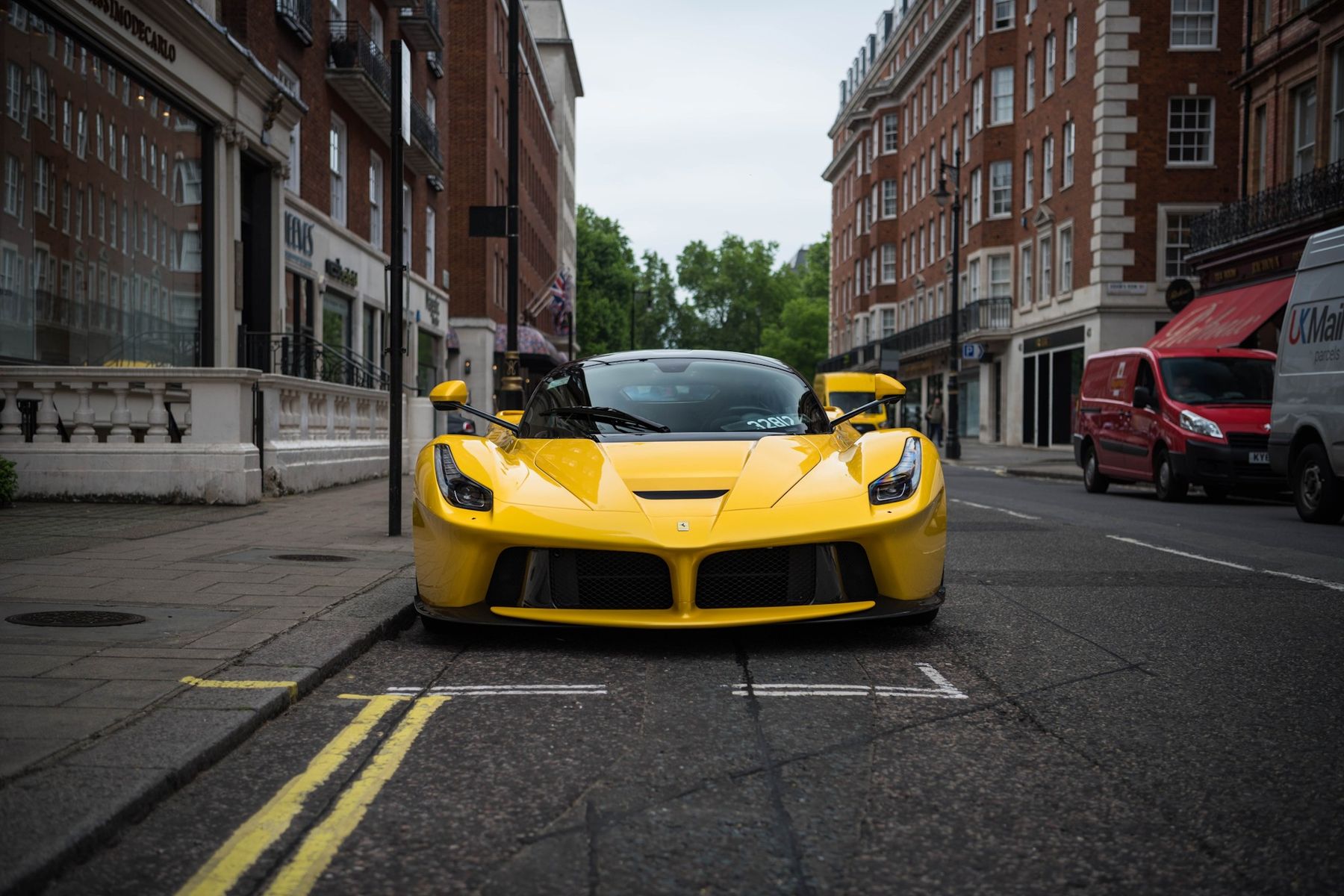
- 2015 Ferrari LaFerrari, €5.18m, a Belgian auction record
- 2015 Porsche 918 Spyder Weissach Package, €3.21m
- 2005 Porsche Carrera GT, €2.76m
- 2015 McLaren P1, €1.89m
- 2022 Ferrari 812 Competizione, €1.50m
What to watch
Monterey has shown that the collector car market has a new centre of gravity: modern, limited-production cars, Ferraris above all, bought by a younger generation of collectors with deep pockets. The new-bidder figures at Zoute suggest that buyer pool is still growing.
Three things are worth watching over the coming months. First, whether the Supercar Index keeps outpacing traditional classics or levels off as more of these cars come to market. Second, how the mid-market fares, since that is where weakness tends to show first. Third, whether the rapid buying and selling of modern cars continues; quick resale gains are pleasant in a rising market but can leave late arrivals exposed when sentiment turns. For brands selling to this audience, the lesson is simpler: the people bidding for an F50 today are, in many cases, the same people who had its poster on their wall thirty years ago.
Selling to high-net-worth buyers? Talk to High Net Marketing about marketing, PR and features in HNWI.