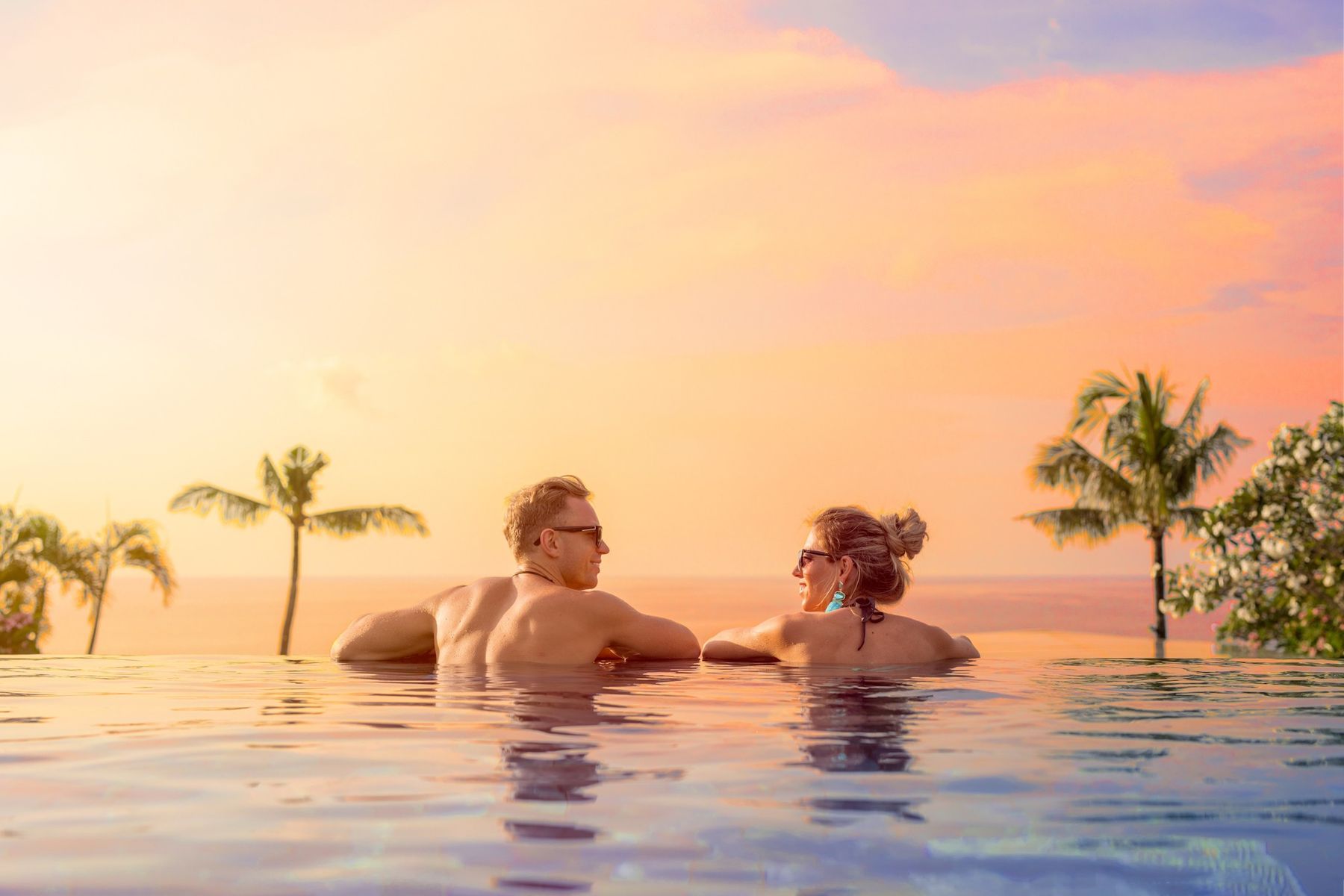
Two of the most talked-about hospitality launches of the autumn could hardly be further apart on a map. Canyon Ranch opens its new resort above Lake Travis in Texas today, and in the Indian Ocean, Fregate in the Seychelles is due to reopen this month after five years behind closed doors. Yet both are built around the same promise: space, seclusion and a stay arranged around the guest rather than the crowd. It is the clearest of the luxury travel trends of 2026, and the industry is reorganising itself to meet it.
The past month has added more evidence. In early October, Skift reported that Airbnb is rebuilding its Luxe programme for high-end homes, with chief executive Brian Chesky telling hosts about the plan and qualification standards already going out. When the world's largest home-rental platform decides it wants another go at villas, it is worth asking why.
The money is concentrated, and so is the demand
The short answer is that a relatively small group of travellers now carries the market. Resonance Consultancy's Future of Luxury Travel report, published in January, estimated that the top 10% and top 1% of American households will spend $544bn on leisure travel in 2026. Their habits have shifted noticeably in a few years:
- The top 10% take an average of 4.3 leisure trips a year and the top 1% take six, against 2.8 for the typical American traveller.
- Spending per trip among the top 10% has risen to $7,900, from $5,100 in 2022.
- For the top 1%, the figure is $12,400, up from $8,400.
Resonance's chief executive, Chris Fair, summed it up bluntly: affluent travellers "aren't a niche segment anymore". The report also found interest in the Middle East among the top 1% doubling, from 6% to 13%, and Canada ranking as their leading international destination.
More trips and bigger budgets do not, on their own, explain the appetite for privacy. That comes from what these travellers say they want once they arrive.
Private villa holidays and the hotel within a hotel
Elite Traveler put a name to the format in September: the hotel within a hotel. The idea is a private estate, lodge or compound that sits inside a larger resort, so guests get their own front door and staff while keeping access to the restaurants, spa and activities next door. The magazine cited Global Travel Collection's 2026 booking analysis, which found bookings for private villas and self-contained resort accommodation rising by a steady 7% a year, and Knight Frank's Wealth Report, which found more than 68% of high-net-worth individuals now put privacy and controlled environments first when choosing where to holiday.
The examples it gathered show how widely the model has spread:
- Camp Sarika by Amangiri in Utah, with ten tented pavilions available for a full takeover.
- Elang at Bawah Reserve in Indonesia, a private island of six lodges.
- The Sanctuary at Como Parrot Cay in Turks and Caicos, an 11-bedroom compound.
- Yarlington Lodge at The Newt in Somerset, a 16-bedroom Regency rectory on 12 private acres.
- Bo House in Saint-Tropez, a villa group run to five-star hotel standards, which has raised a further €30m to expand.
Pauline Brown, author of Aesthetic Intelligence, captured the motivation in the same piece. Simply going to Aspen or Deer Valley is no longer the point, she argued: "You want someplace where you own and control your space."
Fregate: an island rebuilt for fewer guests
Fregate takes that logic to its conclusion. According to its reopening announcement, the island has been rebuilt with just 14 one- and two-bedroom villas, plus The Owner's Estate, the former Banyan Hill Estate, which adds three more. Development is limited to 18% of the island's land.
Each villa has its own pool, golf cart and separate entrance for staff. What has grown is the shared space: the expanded Plantation House is planned to hold an open kitchen, distillery, patisserie, cigar lounge, library, art gallery, kids' club, tailor's workshop, conservation lab and what the owners describe as the Indian Ocean's largest wine cellar. There is also a spa, padel and tennis courts and an enlarged yacht club. Conservation remains central to the pitch, to the point of turning away visiting ships to keep invasive species off the island.
The commercial lesson is that the island has not added rooms. It has added reasons to stay longer in the same few villas.
Canyon Ranch Austin: wellness with a medical centre
Canyon Ranch shows the other half of the trend, where privacy meets health. Its Austin resort, opening on 15 October, spreads 141 rooms across more than 600 acres in Spicewood, with 1.5 miles of lakefront. The facilities read more like a clinic than a spa break: a 40,000 sq ft spa with 37 treatment rooms, billed as the largest in Texas; a 12,000 sq ft medical centre staffed by physicians and clinicians; a dedicated women's health programme; and a 27,000 sq ft fitness barn.
It also has a residential element. The Ranch Home Collection, 134 home sites still under construction, gives owners access to the resort and a concierge wellness programme. That combination of hotel, health and private home is becoming a familiar formula for operators who want guests to return for weeks a year rather than a long weekend.
What it means for brands selling to wealthy travellers
For hotels, villa companies and advisers, a few practical points stand out:
- Fewer keys, more services. The new flagships compete on what surrounds the room, from medical teams to wine cellars, not on room count.
- Ownership blurs into hospitality. Residences attached to resorts let guests turn a favourite stay into somewhere they control.
- Platforms are circling. If Airbnb's Luxe relaunch goes ahead at scale, villa operators and resort hotels will face a well-funded competitor for the same private-home booking.
What to watch
Three things over the winter season. First, the launch date and size of Airbnb's rebuilt Luxe offer, and whether it brings back a concierge layer. Second, early reviews and occupancy at Fregate and Canyon Ranch Austin, which will show whether guests pay for such large investments in shared facilities. Third, whether the hotel-within-a-hotel format moves beyond remote resorts into the ski resorts and cities where crowds are hardest to avoid. Wealthy travellers are spending more than ever. Increasingly, they want to spend it without other people around.
Selling to high-net-worth buyers? Talk to High Net Marketing about marketing, PR and features in HNWI.